

Why you should track your time
Make invisible labor visible

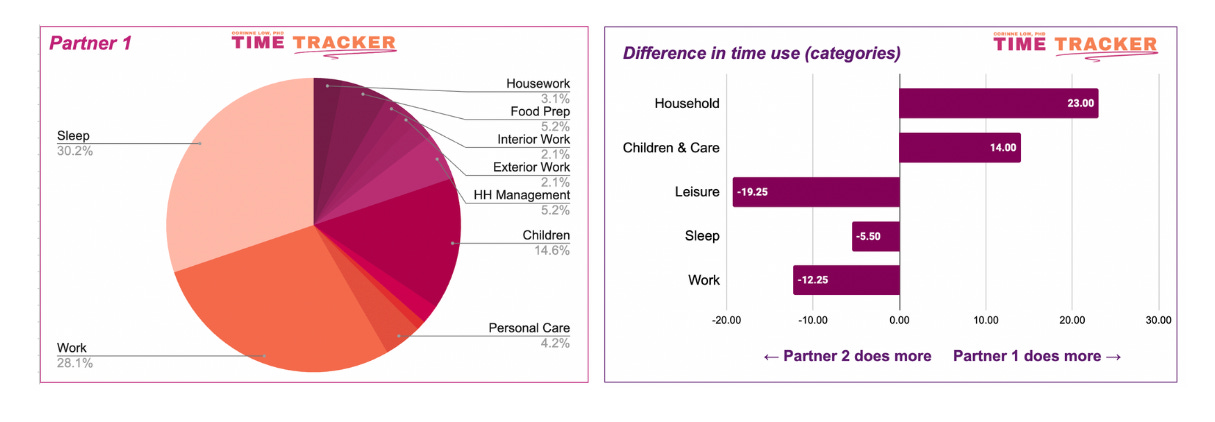
The first time I tried tracking my time I was knee-deep in the muck—on the tenure track at Wharton, commuting 2.5 hours from New York City, with a baby at home and feeling like I was falling behind in everything. I took a life-changing course from Kerry-Ann Rockquemore literally titled the faculty success program, and in addition to loads of other great advice, she said we had to track our time. I was like, are you crazy? I’m telling you I don’t have time for anything, and now you want me to spend more time tracking the time I don’t have? But I did it. And what I found was shocking. I wasn’t spending nearly as much time on research as I thought I was. It was email, it was meetings, it was teaching, it was those “5 minute” social media breaks. And… it was why I wasn’t going to get tenure.1
Data is horrifying. Data is time-consuming and tedious to collect. And data is power. So now when I meet women who feel impossibly squeezed, who feel like their life is a joyless slog, as I once did, I encourage them to try tracking their time, just as an experiment. How much time does all that email and admin take up? How much time are they spending on what I call “sad-face leisure” like phone scrolling? If you flip your calendar to put meaningful work first, and let meetings fill in around them, can you get more done on your most important projects? Similarly, can you put truly nourishing leisure time as your first priority for once, and leave the time crumbles to something else?
But you know what’s better than tracking your time alone? Tracking it with a partner. If you’re feeling squeezed on time, it might not just be about your own choices. And as much as you might be trying to communicate to your partner that things are hard, they might hear you in a different way when there’s a spreadsheet involved.
You know how I know tracking time works? Because I see the data from the American Time Use Survey, where American households track their time, and every time I show it to someone they’re horrified. They’re horrified that dads do the same amount of housework today as they did in the 1970s. They’re horrified that women who are the primary breadwinners spend almost twice as much time cooking and cleaning as their lower earning male partners, and therefore have less time to work.2
Tracking your time gives you data on the visible work and invisible planning and “shadow work” behind all the activities of your household. It’s easy for someone (ok, usually him) to assume they do about half the work. It’s a convenient belief to hold, especially if you want to be a supportive partner in equal partnership. But it turns out, they’re doing half of the tasks they know about. Folding the laundry is a visible task. But what about noting when it needs to be done, sorting it and spraying on the stain remover, and placing the order for detergent before you run out? Dropping the kids off at school—visible, high five, supportive partner! But, buying seasonally appropriate / correctly sized clothes before school starts (and donating the old ones)? Setting up the aftercare and the playdates? Backpacks, school supplies, and LUNCHES (cue horror music)???
When you track your time, you might find out that a morning that feels equal—he drops the kids off at school on the way to work—actually involves two partners who wake up at the same time, but she showers before the kids get up, makes lunches and preps dinner, and walks the dog, while he leaves for the gym, showers when he gets home, and then drops the (fully prepped, brushed, washed, dressed, lunch-packed) kids off at school to thunderous applause.
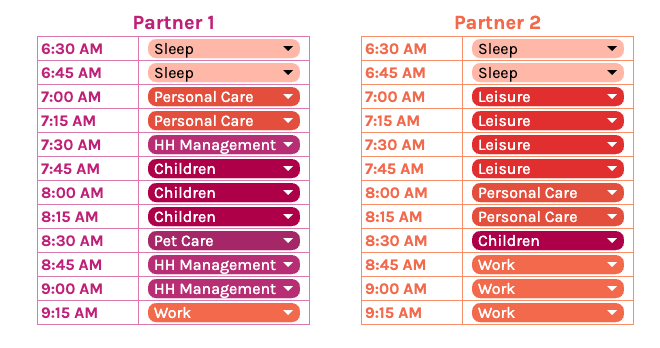
You might find out that someone has 8 hours uninterrupted to work, while someone else is calling pediatrician offices and school counselors at lunch and ordering groceries while on Zoom.
If you’re interested in putting some data behind your hunches, either individually or with your partner, we built an awesome (and color coordinated!) time-tracking spreadsheet, that’s available now exclusively as a pre-order bonus for Having It All.
I’d love to hear about your own horrifying insights from time tracking.
Updates
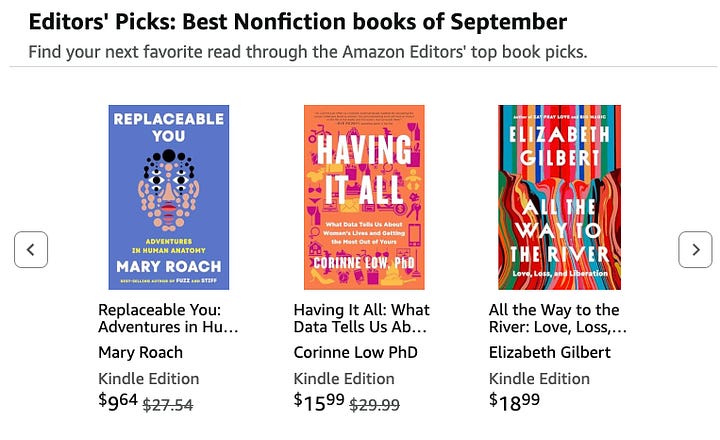
I'm so thrilled that Having It All was named one of Amazon's Editors' Picks, Best nonfiction books of September—what an honor!!!

I appeared on the Liz Moody podcast this week to talk about why women are so exhausted, and how to feel better:
I’m gearing up for the Having It All book tour—there is a pre-release event with THE Eve Rodsky on Monday (Sept. 8) in Santa Monica, then it’s non-stop travel through the end of October. Check out my events page and sign up—I’d love to see you at one of the stops!

Thanks for reading the Femonomics Newsletter!

Corinne Low is an author, economist, and professor. She teaches at the Wharton School of the University of Pennsylvania. Her first book, Having It All: What Data Tells Us About Women's Lives and Getting the Most Out of Yours, is out with Flatiron on September 23. Visit Corinne’s website, book a talk, or write to us.



Don’t worry—I eventually did!

I'm a huge proponent of time tracking! And I have a nutso system that's fallen apart during book promo, but I'm trying to get back on track now - and this is great inspiration!